The Hub brings your company’s knowledge into one connected model. We start with your data, the meaning behind it and the way your business works. Then we give AI the context to help your people decide and act.
Data modeled firstConnected business contextGoverned actions
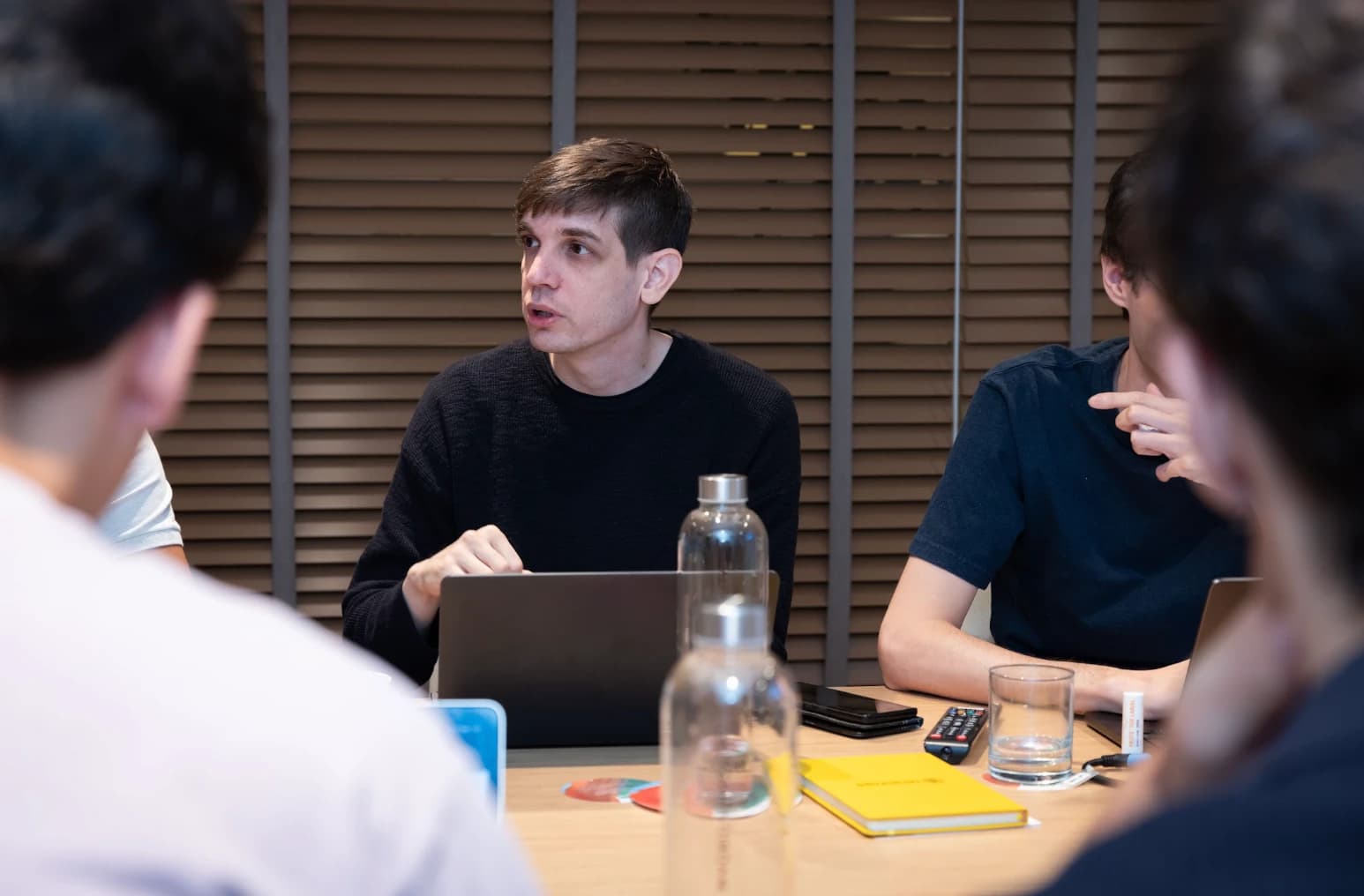
Connect the knowledge behind everyday decisions. TensorOps team photography.What becomes possible
Without a proper ontology, AI is full gas in neutral.
01
Model the business first
Identify the facilities, suppliers, shipments, orders and commitments that matter. Define their properties and relationships, reconcile inconsistent records and agree what each concept means.
02
Give answers real context
Connect documents and operational systems to the same business objects. Let people ask questions across the company, with source evidence and access controls built into the design.
03
Turn knowledge into action
Bind business rules and approved tools to the model. Build agents that can propose a next step, route it for review and record what changed.
The foundation comes first
AI needs a model of how your company works.
A shipment belongs to a supplier, feeds a factory and affects a customer order. The Hub connects those facts to inventory, production schedules and the people responsible for decisions. Explore how one delay moves through a manufacturing business.
One business. Connected operations.
Industrial equipment manufacturer
Illustrative operating model · select an object to inspect its properties and connections.
Company Brain · the ontology systemData · logic · action · security
Business objectsSecurityData · logic · workflows
Select a 3D object or a card below to inspect it.
01 · Business impact
One late shipment. A customer commitment at risk.
Housings arrive on 14 Jun. Assembly starts two days later, shifting dispatch to 18 Jun and projected delivery to 20 Jun — past the 18 Jun promise.
02 · Business logic
Follow the dependencies.
Assembly needs all 240 housings. The warehouse has no finished stock to cover the order. Production time, transit time and the promised date determine delivery risk.
03 · Governed action
Propose a recovery plan.
An agent could compare alternate stock and expedited transport, then send a proposed change to the planning office for approval. Record the decision before updating schedules.
A worked example of the Hub’s approach, using fictional records and simplified lead times. Scenario changes stay inside this illustration.
The Hub architecture
Read the business. Write with authority.
People and agents use the same connected model. Read operations bring back context; write operations run through business logic, permissions and approval before changing a system.
Company Brain Read · Reason · ActOne model. Every decision connected.
Scoped access and decision records cover every step.
01 · Read context
Read the carrier update for SH-104 and follow its links to the factory, material requirements and customer delivery promise. The ontology resolves the business context and the caller’s access.
Illustrative shipment state: arrival 14 Jun · projected customer delivery 20 Jun. No operational write is executed.
Design direction for review
This animated operating model connects facilities, shipments, orders and their owners above security and service layers. The architecture below shows how context reads and approved writes use the same model. The example uses fictional records; a real deployment would model your facilities, system contracts and approval rules.
Inside the Hub
A shared foundation for every AI workflow.
The company model
Our difference is the order of work: model the data and the business before adding AI. The ontology becomes the shared context for people, applications and agents.
Objects & relationships
A common language for your entities, their attributes and the connections between them.
Logic & tools
Connect calculations, policies and operational tools to the objects they affect.
Security & traceability
Design permissions, approval boundaries and decision records across the full workflow.
Engagements
Build the foundation. Prove one useful workflow. Expand.
Rapid-Impact Intervention
SWAT Team
A high-impact strike team that diagnoses, architects, and ships. We bring the ML engineers, infra, and domain expertise needed to deliver measurable lift within weeks.
End-to-end diagnostic and solution delivery
Cross-functional team: ML engineers, infra, domain SMEs
A controlled experimentation environment for validating strategies before they touch production. Test against realistic system dynamics and quantify impact upfront.
Realistic simulation with historical data replay
A/B scenario testing for system-level decisions
Quantified impact forecasting before production rollout